
How Five Established Affiliate Marketing Resources See the Industry Right Now
Affiliate marketing has accumulated a lot of conventional wisdom over the years. Some of it is useful and some of it should probably have been retired years ago. It took a lot of people to build that conventional wisdom, so we decided to check in with five industry voices with different vantage points to see what still holds up.
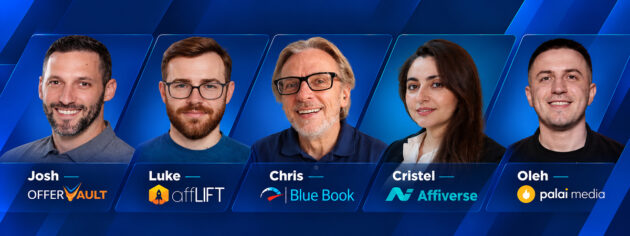
Nataly Ptitsyna, our Head of PR, put the same ten questions to five resources affiliates use daily:
- OfferVault, a marketplace for discovering and comparing offers across networks.
- mThink, publisher of the Blue Book, the industry’s longest-running network trust rankings.
- PALAI, a media outlet covering traffic and affiliate marketing.
- affLIFT, one of the most active community forums for affiliates at every level.
- Affiverse Media, a leading news and insights outlet covering the industry.
The questions covered where things stand right now: what’s overhyped, what’s underrated, which pieces of advice should be banned outright, and which debates have been running so long nobody remembers who started them.
Put all five perspectives together and you get something more useful than a list of predictions: an idea of what people working around the industry are actually discussing and paying attention to. There are familiar arguments, unexpected points of agreement, and a few assumptions that probably deserve another look.
Where It All Started
Each of these resources started with a particular need in mind, and most of their answers give a pretty vivid account of what they were trying to solve.
mThink’s Chris Trayhorn launched the mThink Blue Book in 2009, right after HasOffers arrived and, in his words, “400 new lookalike CPA networks appeared, seemingly overnight.” The problem was trust: “Advertisers and affiliates were desperate for a trusted voice that could help them work out which networks were the good guys.”
His read on the mission today: “Nearly 20 years later it turns out that’s still a thing that people need.”
affLIFT founder Luke started in 2018 with a specific complaint about the forums that existed at the time: “You had free forums filled with spam, or premium communities that were too expensive for most beginners.”
He wanted something in between, “a place where beginners can ask questions without feeling dumb, experienced affiliates can share what is working, and companies can connect with real affiliates.” The scope has changed since, with contests, tools, courses, a large campaign-data library, but the core idea hasn’t: “help make affiliate marketing more accessible and give everyone a little LIFT.”
OfferVault’s Josh Sebo says the resource was built to make it easier for affiliates to discover and compare offers across networks. The company says that basic discovery has become much easier over time, but that hasn’t made the decision-making problem any simpler. “Today, simply finding an offer is much easier than it used to be,” they said. “The bigger challenge is figuring out which offers, companies, and opportunities are actually worth your time.”
PALAI’s Oleh started local. “Initially, our main goal was to establish the first high-quality media outlet in Ukrainian,” he said. Once that community was solid, the team scaled globally, but the mission remained: “to produce and deliver top-tier content on traffic generation and affiliate marketing, consistently.”
Affiverse’s Cristel Guajardo described a similarly direct founding goal: “Affiverse Media was built on the mission to make affiliate marketing better.” What started as expert commentary on industry change has grown, in her telling, into “a community where affiliates and performance marketers learn about the latest news, insights, trends and industry learning.”
Relationships Are the Industry’s Hardest-to-Automate Advantage
When we asked what deserves more attention, we got a fairly tight grouping around two themes: relationships and what affiliates can build and retain beyond the initial click. The answers covered everything from the practical value of better partnerships to the longer-term value of audiences, data, and brands that don’t depend entirely on someone else’s platform.
Josh puts partnerships at the top of the list.

His closing thought on the subject: “Traffic and technology matter, but the quality of the people you work with can make an enormous difference.”
Cristel approached partnerships from the program management angle. “How marketers maintain partnerships and a strong relationship with a partner is key to growing a profitable program,” she said. “Some might focus on the quantity of partners, but I believe the focus should be on the quality.” She also pointed to brand building, where “it might be easier to create content, but the quality and reach is something that brands need to consider to plan a successful marketing strategy.”
The other three respondents converged on first-party data and retention.
Chris was direct: “Together with having a great brand, first-party data is your best defense against whatever havoc AI is going to wreak on the industry.”
Oleh gave a three-part answer in a single line: “Brand building, retention, and first-party data.”
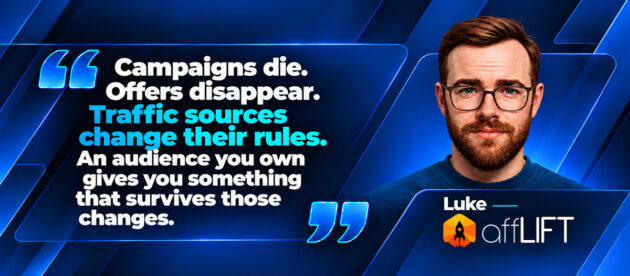
Luke went furthest, starting with an industry-wide blind spot. “Affiliates are very good at buying a click, sending it to an offer, and then immediately looking for the next click,” he said. “We do not spend enough time thinking about what happens to the user after that.” He has been building audiences for most of his career, and says email is “still probably the best channel across my projects.” His summary works as a thesis for the whole section:
Cristel highlighted one more issue, recruitment and training. Demand for skilled affiliate marketers is rising, she said, but “this is an area where you learn while doing the job, and I feel training is something that needs to be considered when hiring a new person into the role.”
The Industry Is Arguing About the Wrong Things
Ask the same five people what the industry talks about too much, and you can bet serious money AI will come up first. Josh, Luke, and Cristel each said, independently, that the conversation has drifted toward tools and away from substance.
Josh: “There’s endless discussion around automation, agents, prompts, and new tools, but affiliates still win by understanding traffic, offers, audiences, tracking, negotiation, and relationships.”
Luke wants to see the work instead: “Show me the campaign. Show me what you tested. Show me what failed and what you did next. That is far more useful than another list of 100 prompts.”
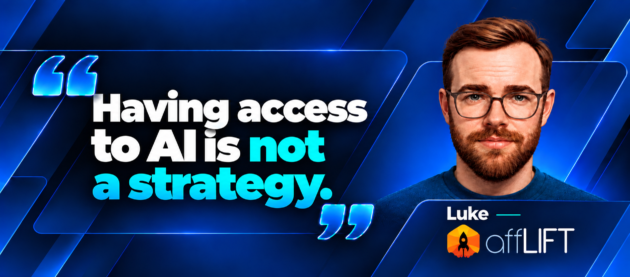
Cristel made the case from the partnership side. “Efficiency alone does not build a successful program,” she said. “Human judgment, sector knowledge and genuine relationships remain central to choosing the right partners, interpreting performance and building long-term trust.”
The other two respondents named different targets entirely, which is its own kind of data point.
Chris said the topic getting ignored is who controls the money. “The monopoly ad platforms have taken almost all the growth over the last decade,” he said, noting they “made $350 Billion dollars more in 2025 ad revenue than they did 10 years earlier.” His challenge to the industry: “Imagine how our industry would be different if just 10% of that flowed into affiliate marketing each year.”
Oleh pointed at Facebook traffic coverage.

What goes unaddressed, he said, is “business legalization, diversification, in-depth niche breakdowns, or topics that actually require dedicated research and expert insights,” while the market fills up with “ChatGPT-generated copy.”
Responses line up almost perfectly on a different question: which AI habit will look embarrassing in three years. Four of the five answers point out the problems with generic output shipped without enough human judgment behind it.
- Josh: “I think we’ll look back at this period and wonder why so many people focused on generating 100 average pieces of content instead of using AI to help create 10 genuinely good ones.”
- Oleg: “In three years, looking back at today’s generated assets will feel like looking at a feature phone while holding an iPhone 17 Pro Max in your hands.”
- Luke: “You can always tell when someone copied the answer directly from an AI tool. The formatting is still there, the unnecessary headings are still there, and it says a lot without really saying anything. I have even seen people leave the Markdown in the post.”
- Cristel: “We already see similar-looking AI images, templated copy and copy-and-paste outreach sent to every partner without considering their audience, history or business model.” The habit she expects people to question is “treating AI output as a finished product rather than a starting point that still needs expertise and personality.”
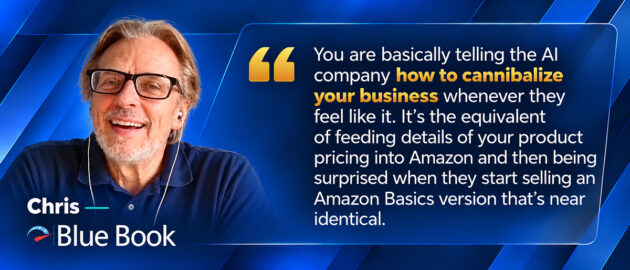
Chris took a different angle, providing the most pointed warning of the group:
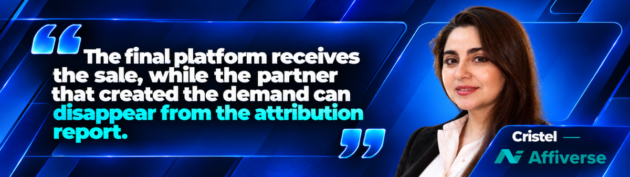
Cristel also raised something none of the other four addressed: the affiliate “halo effect.” A creator can introduce a product and shape demand, only for the customer to buy later through Amazon, branded search, or a retailer’s site.
Affiliate Marketing Misconceptions Worth Retiring
Chris’s answer was the shortest and sharpest of the whole survey. The biggest misconception, he said, is “That Google is here to help.”
Josh went after the belief that new technology has made the business easier: “I think it’s become easier to participate, but harder to differentiate. The barrier to getting started is probably lower than ever, but because everyone has access to more tools, data, creatives, and information, creating a real sustainable advantage is arguably harder.”
Luke questioned a common strain of pessimism, the idea that affiliate marketing has gotten harder and so the opportunity is gone.
“Harder does not mean dead.”
His evidence: “Offers still convert. Traffic sources still need advertisers. Companies still want leads and customers.” As for the constant change, “that constant change is one of the things I have always liked about the industry.”
Oleh pointed out a problem with assuming a working approach will last in 2026. “The industry has accelerated drastically, especially with the rise of AI. Winning angles and campaigns now burn out in six to twelve months, making continuous adaptation essential.”
Debates That Refuse to Die
Some debates in affiliate marketing have outlasted entire platforms and business models. We asked our contributors to pick one they still see getting group chats heated.
Josh named CPA versus RevShare. “That debate has probably been happening for as long as I’ve been in the industry, and there’s still no universal answer,” they said. “CPA gives you more predictability and immediate revenue, while RevShare can create substantially more value over time if the offer, retention, and player quality are strong.” Their verdict: “The right answer usually depends on the affiliate, the vertical, the advertiser, and how much confidence you have in the long-term economics.”
Luke picked landing page versus direct linking, and landed on a measured take about measuring:
“Split-test your landing pages against each other and against the direct link. Let the campaign answer the question.”
He added: “Affiliates love universal answers, but performance marketing usually refuses to give us one.”
Oleh’s pick was SEO versus paid traffic. “SEO specialists, in particular, tend to resent paid media teams that try to step into SEO for the sake of diversification, creating unnecessary chaos in the market.”
Chris took the question in a different direction: “Do neck tattoos make crypto affiliates more effective?”
What Newcomers Get Told and What Everyone Should Stop Doing
These two questions produced plenty of overlap: some of the advice contributors dislike most is also behind the habits they think affiliates should leave behind.
The worst advice for newcomers
Josh’s pick was “Just copy what’s already working.” They agree there is value in studying successful campaigns, but say the useful part comes next: “The better approach is to understand *why* something is working — the audience, economics, creative, funnel, traffic source, and offer-market fit. That’s what gives you something you can actually build on.”
Chris went with two words: “It’s easy.”
Oleh’s choice involved where that same overpromise usually comes from: “Buy a Facebook media buying course and you’ll immediately generate millions in profit.”
Luke’s answer came from the opposite direction. The worst advice, he said, is “That they need to buy every tool before they can launch their first campaign.”
His fix is to start small: “Pick one traffic source, one ad format, one offer type, and one small campaign.” The math, in his view: “Carefully spending $25 to $50 on a live campaign will teach you more than buying a bunch of tools and reading another 100 threads without launching anything.”
What to stop doing
Josh was blunt: “Stop chasing every new shiny object.” Their reasoning: “Constantly jumping to the next thing means you’re also constantly resetting your learning curve.”
Luke’s version was more tactical: “Stop changing everything at once. Beginners will change the offer, GEO, bid, creative, landing page, and traffic source at the same time. Then, if performance improves or gets worse, they have no idea why.” Meticulous documenting and even public follow-alongs were among his suggestions for staying accountable and improving.
He also has a way to think about losses: “A failed campaign is usually just data. You paid for information, so use it.”
Oleh pointed at the platforms. Affiliates should stop “trying to ‘outsmart’ ad platforms,” which he called “shooting yourself in the foot.” The alternative is “building a compliant strategy that will open up far more sustainable, long-term opportunities.”
And Chris closed the question with a joke that’s only half a joke: “I’d love people to stop adding me to Zoom webinar invitation lists without consent.”
What Everyone Got Wrong Five Years Ago
We asked each contributor for an opinion they held five years ago that they’ve since abandoned. The answers align closely with the themes above: more access turning into tons of junk data, and AI progressing faster than anyone’s early skepticism accounted for.
Josh once believed more offers, more networks, and more information were almost always better for affiliates. Now: “We’ve gone from an information-scarcity problem to an information-overload problem.” Their conclusion is that “filtering and trust are becoming more valuable than sheer access.”
Oleh used to think the market was stable and that tools would only simplify the work. “In reality, the surge of new tech has intensified competition, increased regulatory and legal pressure, and drastically shortened the lifecycle of effective approaches.”
Luke once said AI was limited to analysis and optimization. “I definitely changed my mind about that,” he said. Today “it has gone from being an interesting optimization feature to something that can actually perform work.” He still draws a line at strategy: “If you automate a bad strategy, you just lose money faster.”
Cristel once saw affiliate marketing as a supporting channel built around links, referrals, and commissions. That view didn’t last. “I no longer see affiliate marketing as a small supporting channel,” she said. Managed well, it can “influence product discovery, build trust, support entry into new markets and become an important part of a brand’s wider growth strategy.”
Chris had the most rueful answer. He expected the dating vertical to consolidate around a few companies that had worked out how to sign up real women. His follow-up: “Instead…well….just look at it…”
What Each Contributor Is Proudest Of
We asked each contributor to point to one piece of their own content, and the range says a lot about how differently these publishers define value.
Josh chose Offervault’s podcast, The Affiliate Marketing Show. “It gave us a chance to go beyond offer listings and have real conversations with people from across the industry – affiliates, networks, advertisers, platforms, and other industry leaders. What I like most about it is that it captures the people and perspectives behind the business. Affiliate marketing changes quickly, but hearing directly from the people actually building and operating in the space creates a type of content that can stay useful well beyond the week it was published.”
Chris pointed to mThink’s rebuilt Blue Book rankings site. “I have to say it’s our brand new Blue Book rankings site. We’ve rebuilt it from the ground up to be AI-positive and crazy fast, but I think it’s taken us to a new level in terms of being useful to users, whether they are a brand or an affiliate. I’m really happy with it.”
Oleh highlighted PALAI’s Offers Directory. “That would be our Offers Directory. We’ve aggregated over 3,700 offers in one place, making it significantly easier for affiliates and business development managers to discover new products and compare base terms across different partner networks.”
Luke went back to his very first thread on affLIFT, a guide to setting up a campaign on Zeropark. “It is the first thread I published on affLIFT that is still viewable. I was making good money with Zeropark when I launched the forum, and I wanted to share what I was doing as a way to thank the early members who took a chance on the community. The guide itself is old now, but it represents the original idea behind affLIFT: take something that is actually working, document it honestly, and use it to help someone else launch a campaign. Thousands of threads later, that is still what I want the community to be.”
Cristel singled out The Affiliate Data Stack in 2026. “It reflects what we want Affiverse content to do: take a complex industry challenge and turn it into practical guidance. The guide explains how tracking, partner management, business intelligence, finance and compliance fit together, why different systems frequently report different figures, and how teams can build a clearer data structure as their programs grow.” She also pointed to four other pieces covering AI search strategy, TikTok creator monetization, Google Shopping regulation in Europe, and a podcast episode on affiliate fraud and partner vetting.
The Throughline
Several answers point to the same underlying change: offers, tools, information, and now AI itself have all gone from scarce to common, and that’s exactly what’s made them less useful as an edge. What’s taking their place is harder to buy: real relationships, audiences you own instead of rent, and the judgment to tell a good opportunity from just an available one.
We’d add one thing from our side. We work with most of the platforms represented here on a daily basis, and if there’s one pattern we’d point a newcomer to first, it’s this one: tools will keep multiplying, but they won’t be what separates the people who do well from the people who don’t.
Thanks to all five for the time and honesty in these answers. If any part of this made you want more, we’d strongly encourage you to spend some time on all five resources directly.